
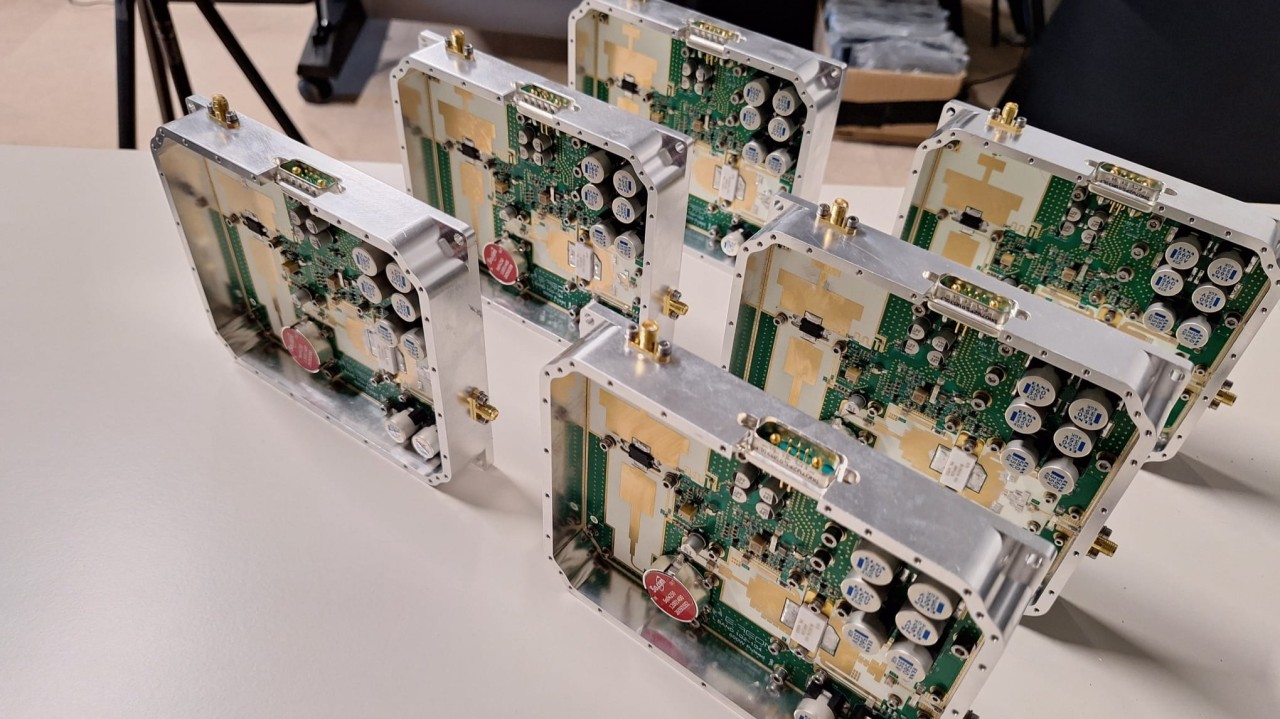
An RF amplifier can meet its frequency, power and gain requirements and still leave significant system-integration work to be done.
Cooling, control interfaces, fault handling, mechanical constraints and production requirements often determine whether an engineer should use commercial off-the-shelf hardware, adapt an existing design or develop a dedicated RF subsystem.
Introducing E-REON RF Engineering Notes
In the first edition of E-REON RF Engineering Notes, When Is a COTS RF Amplifier Enough — and When Is It Not?, we explain how we approach this decision using examples of RF hardware designed, manufactured and tested at our EU facilities.
The note considers questions including:
- whether the available cooling arrangement supports the required duty cycle
- how control, monitoring and fault handling fit the wider system architecture
- whether the available enclosure and RF interfaces suit the mechanical design
- when an existing amplifier platform can be adapted efficiently
- when a dedicated development offers the more reliable route to production
Meeting the headline RF specification is important, but it is only one part of an integration-ready solution. Direct access to the engineering and manufacturing team can make a practical difference when electrical, thermal, mechanical and production constraints must be resolved together.
Read the first RF Engineering Note: When Is a COTS RF Amplifier Enough?
For amplifier selection or RF subsystem integration enquiries, contact info@e-reon.com.